Updated for 2026: a lot has changed since this list was first written. Microsoft retired Skype in May 2025, FaceTime has become the default end-to-end-encrypted pick for anyone on Apple devices. The comparison table below sorts that out at a glance, and each app now carries a sourced 2026 security status.
In this article we are going to learn about the best video calling apps available in the market today, their pros and cons .
Here are some of the considerations when choosing a secure video calling app
- Cost
- Privacy
- Anonymity
- Security
- Ease of Use
- Compatibility
Here is our list of the 9 Most secure messaging applications and how they deliver on our criteria for security
- DeadSimpleScreenSharing.com
- Signal
- FaceTime
- Microsoft Teams
- Skype (retired May 2025 — see note below)
- Google Meet
- Cisco WebEx
- Jitsi Meet
- Viber
| App | E2EE by default? | Metadata / privacy | Platforms | Group call cap* | Open source? | Owner |
|---|---|---|---|---|---|---|
| DeadSimpleScreenSharing | ✅ Yes | Anonymous — no signup, login, phone number, or any PII required | Browser-based (any OS, desktop & mobile) | Unlimited participants | ❌ No (self-hosted option available) | Next Path Software Consulting Inc. |
| Signal | ✅ Yes (all calls & chats) | Minimal; sealed sender; usernames hide phone number | iOS, Android, Mac, Windows, Linux | ~50 (raised over time) | ✅ Yes | Signal Foundation (non-profit) |
| FaceTime | ✅ Yes | Apple can't decrypt; calls not stored | Apple only (+ web link to join) | 32 | ❌ No | Apple |
| Viber | ✅ Yes (chats & calls) | Not stored server-side; cloud backups not covered | iOS, Android, Win, Mac, Linux | 40 | ❌ No | Rakuten |
| ✅ Yes (Signal Protocol) | Meta-owned; collects metadata; usernames rolling out 2026 | iOS, Android, Win, Mac, Linux, web | 32 (video) | ❌ No | Meta | |
| Cisco Webex | ⚙️ Optional (Zero-Trust / MLS) | Enterprise privacy policy; records some data | Win, macOS, Linux, iOS, Android | Varies by plan | ❌ No | Cisco |
| Google Meet | ⚙️ Optional (client-side encryption on select Workspace plans; 1:1 legacy Duo calls E2EE) | Encrypted in transit by default; Google-owned; requires a Google account | Web (no desktop app), iOS, Android | 100 free (60-min group limit) / 150–1,000 on Workspace plans | ❌ No | |
| Microsoft Teams | ⚙️ Optional (1:1 only, off by default) | Enterprise compliance; collects usage data | Win, Mac, iOS, Android, web | Varies by plan | ❌ No | Microsoft |
| Jitsi Meet | ⚙️ Optional for group (P2P 1:1 encrypted) | Self-hostable; depends on deployment | Web, mobile/desktop browsers | Depends on deployment | ✅ Yes | 8x8 |
| Skype | ⛔ Retired May 2025 | — | — | — | — | Microsoft |
Deadsimplescreensharing.com
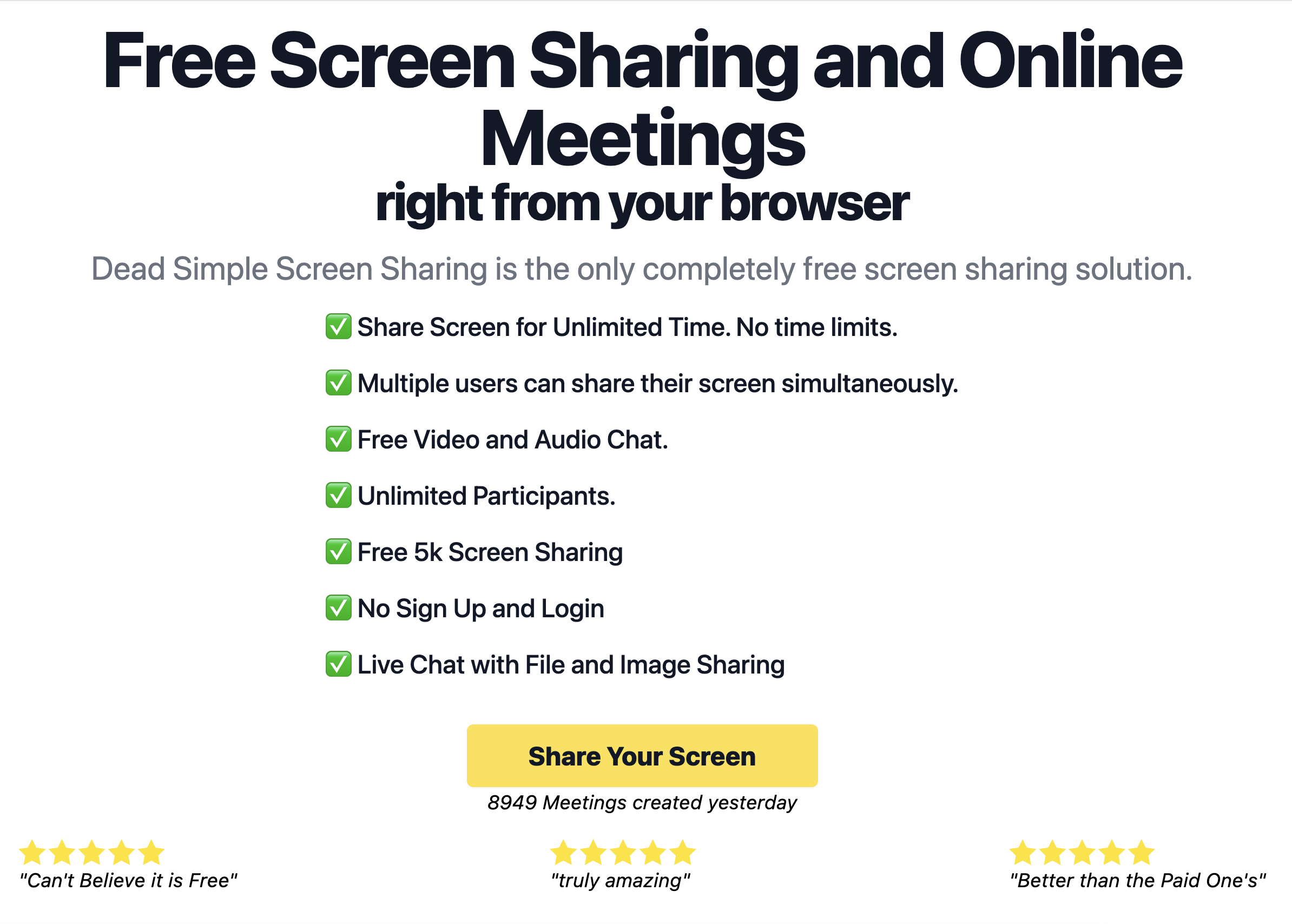
DeadSimpleScreenSharing is a screen sharing and video conferencing platform that is known for privacy and security.
Here are some of the features of DeadSimpleScreenSharing
Features
- Cost: Free for unlimited participants.
- Privacy: Privacy features include, no need to create an account and end-to-end encryption, private rooms where anyone cannot enter without permission
- Anonymity: There is no need to create an account, so your identity remains completly anonymous. Not even DeadSimpleScreenSharing Knows who are you or have any data associated with you.
- Security: DeadSimpleScreenSharing has end-to-end encryption enabled for complete privacy and security
- Ease of Use: As the name implies the DeadSimpleScreenSharing is super easy to use. You do not need to create an account or install any software on your computer.
- Compatibility: DeadSimpleScreenSharing works on the browser and there is no software that needs to be installed on your computer or mobile phone. Thus it works with any device connected to the internet and has a web browser.
🔒 Security status (2026): End-to-end encrypted by default for 1:1 and group chats and calls. Also completly anonymous as it does not require your name or phone number or any identifyable information
Potential Drawbacks
- Recording available in paid plans
- Closed source code.
Metered TURN servers
- API: TURN server management with powerful API. You can do things like Add/ Remove credentials via the API, Retrieve Per User / Credentials and User metrics via the API, Enable/ Disable credentials via the API, Retrive Usage data by date via the API.
- Global Geo-Location targeting: Automatically directs traffic to the nearest servers, for lowest possible latency and highest quality performance. less than 50 ms latency anywhere around the world
- Servers in 12 Regions of the world: Toronto, Miami, San Francisco, Amsterdam, London, Frankfurt, Bangalore, Singapore,Sydney (Coming Soon: South Korea, Japan and Oman)
- Low Latency: less than 50 ms latency, anywhere across the world.
- Cost-Effective: pay-as-you-go pricing with bandwidth and volume discounts available.
- Easy Administration: Get usage logs, emails when accounts reach threshold limits, billing records and email and phone support.
- Standards Compliant: Conforms to RFCs 5389, 5769, 5780, 5766, 6062, 6156, 5245, 5768, 6336, 6544, 5928 over UDP, TCP, TLS, and DTLS.
- Multi‑Tenancy: Create multiple credentials and separate the usage by customer, or different apps. Get Usage logs, billing records and threshold alerts.
- Enterprise Reliability: 99.999% Uptime with SLA.
- Enterprise Scale: With no limit on concurrent traffic or total traffic. Metered TURN Servers provide Enterprise Scalability
- 20 GB/mo Free: Get 20 GB every month free TURN server usage with the Free Plan
- Runs on port 80 and 443
- Support TURNS + SSL to allow connections through deep packet inspection firewalls.
- Support STUN
- Supports both TCP and UDP
Signal
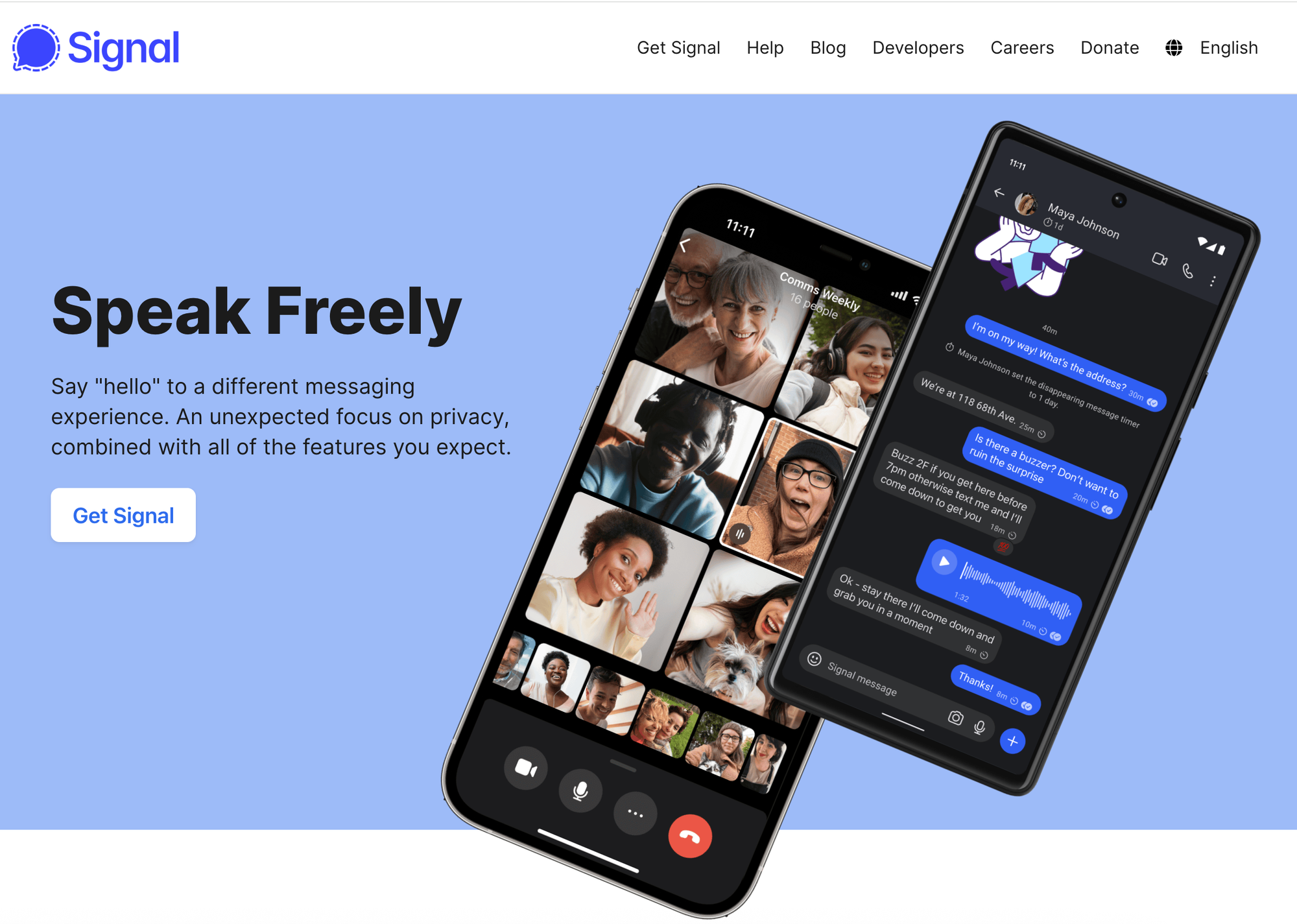
Signal is an open source messaging and video calling application known for its privacy and security. It is developed by the non profit Signal foundation. It has the following featues
- Cost: Signal is a free to use app sponsored by the Signal foundation
- Privacy: Signal is a Open source software and has the code open to review by everyone. Signal also does not store any data on its servers, all the data is stored on the users device
- Anonymity: Signal verifies your phone number but does not store any other information on its servers. So only you and the people you share your Signal account with know what you are talking about
- Security: for security the signal app uses the open source signal protocol and end-to-encryption to encrypt all the communications
- Ease of Use: Signal is pretty much easy to use, you need a phone running iOS and Android and that's it. It is favoured by journalist, human rights activist and entrepreneurs seeking high level on security
- Compatibility: with dedicated apps for iOS and Android plus desktop apps for Mac, Windows and Linux
> 🔒 Security status (2026): End-to-end encrypted by default (Signal Protocol) for all messages and calls; run by the non-profit Signal Foundation. Metadata is minimised via sealed sender, and since Feb 2024 you can register a username and hide your phone number. In Oct 2025 Signal shipped its post-quantum "Triple Ratchet", hardening the protocol against future quantum attacks. Widely regarded as the privacy benchmark.
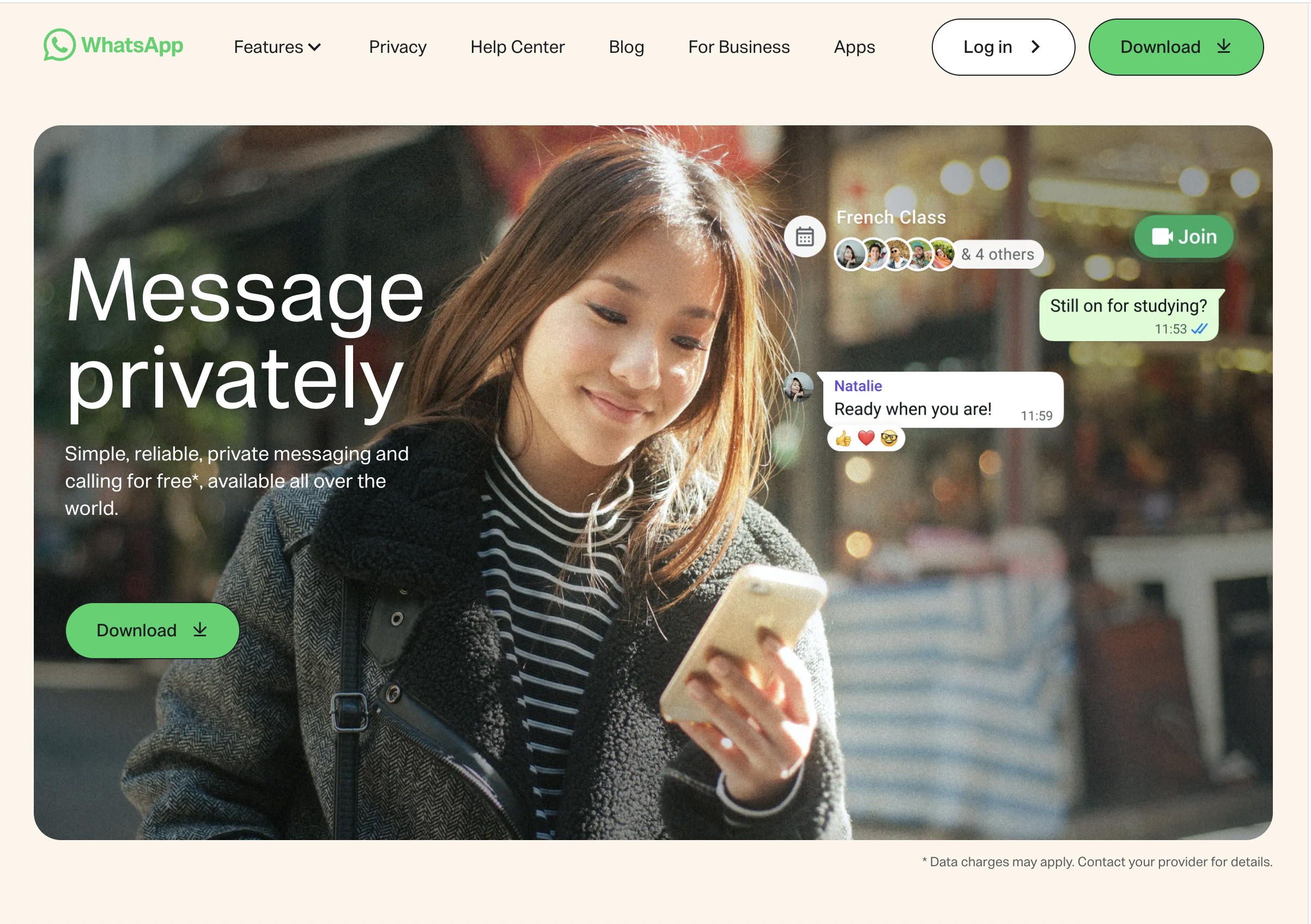
WhatsApp is a widely used messaging app by Facebook. It offers a free service and was known for privacy and security.
But recently Facebook has started sharing some information and many people with security considerations have swithced to Signal.
But Facebook promises that the chats and video calling that users do are secure but other information such as contact information and some other things are shared with Facebook
Features
- Cost: WhatsApp like Facebook is free to use
- Privacy: Facebook says that chat and video calls are not accessed by facebook but some of the user details are shraed by whatsapp to facebook. Video is routed through whatsapp servers but it is completly encrypted
- Anonymity: User Anonymity is not there in whatsapp, because all the contact information is shared with facebook from whatsapp
- Security: WhatsApp has end-to-end encryption for messages and messages are stored in the facebook servers for sometime until they are recieved by the chat participants after that the messages are deleted
- Ease of Use: Whats App is very easy to use and has features like video calling group messages and status etc
- Compatibility: WhatsApp has dedicated apps for iOS, Android, Mac, Windows and Linux plus web apps as well
Potential Drawbacks
There are certain drawbacks to using whatsapp with regards to privacy and security considerations
- Not truly private video calling app because certain user data is shared with Facebook
- Cannot be used separately without a phone number
> 🔒 Security status (2026): Messages and calls are end-to-end encrypted by default (Signal Protocol), but WhatsApp is Meta-owned and collects metadata. In June 2026 it began rolling out optional usernames — reserve now; contact-by-username arrives in waves from July 7, 2026 and globally from September — with no public directory and an optional "username key" gating first contact. A real privacy gain (roughly where Signal has been since 2024), but you still register with a phone number, so it hides your number from other users, not from Meta. Separately, in Feb 2025 Meta confirmed a Paragon "Graphite" zero-click spyware campaign against ~90 journalists and activists; WhatsApp patched it and sent a cease-and-desist. The encryption wasn't broken — the spyware read messages on-device after decryption — a reminder that E2EE protects the transport, not a compromised endpoint.
FaceTime
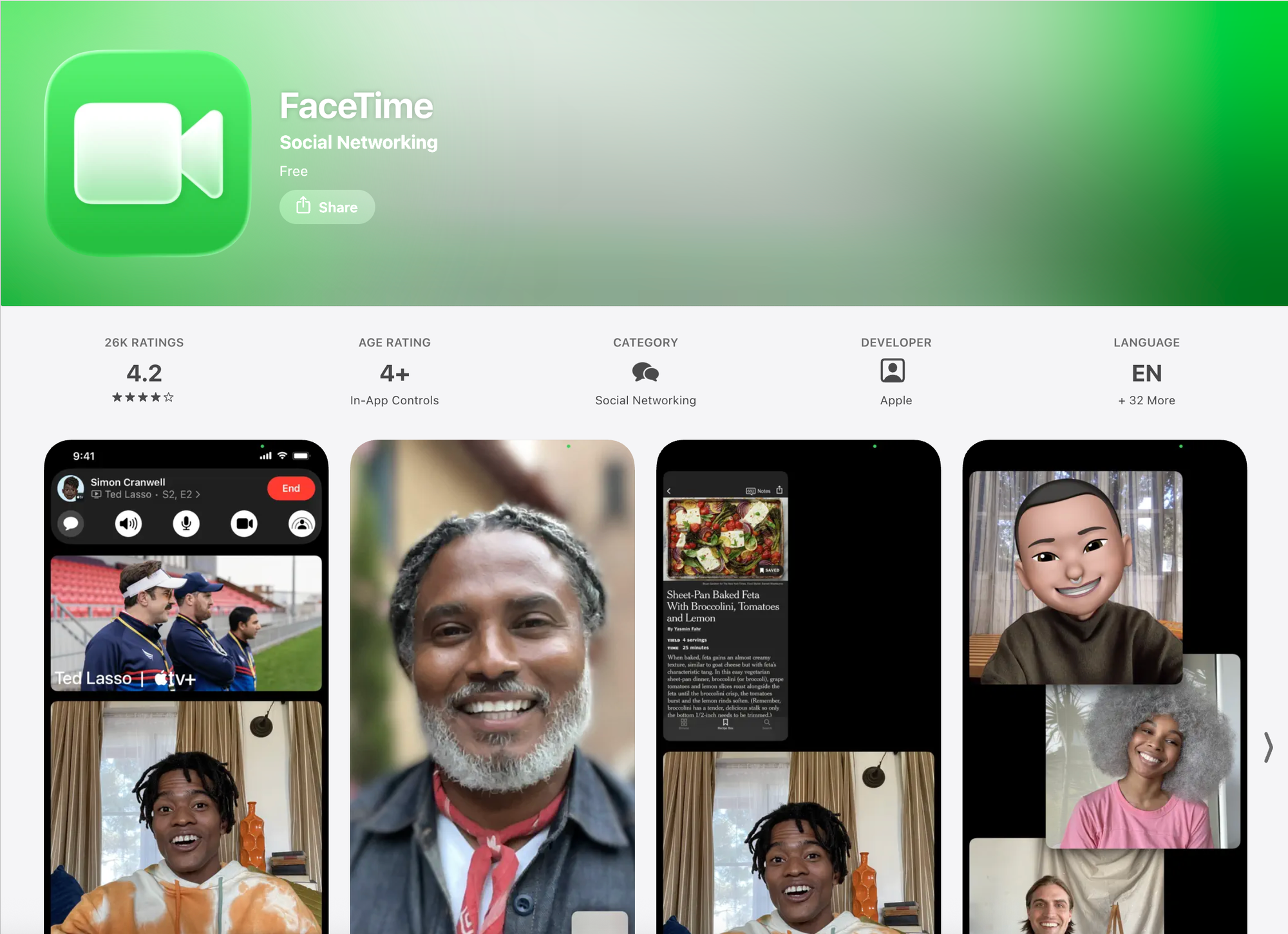
FaceTime is the Apple built-in video calling and voice calling application available across all apple devices including iPhone, iPad and MacOS devices. In 2026 it is one of the few end-to-end encrypted apps available
Features
Cost: Free on all apple devices, no subscription required.
Privacy: Calls are end-to-end encrypted and Apple does not store and cannot decrypt your calls including audio and video
Anonymity: You can be identified by your apple account including phone number or email, so it is not anonymous but the content of your call stays private between participants
Security: The media which is being relayed is AES-256 bit encrypted and established over a verified per session key exchange. This is the same posture that apple documents in its Platform security guide.
Ease of use: It is very easy to use between apple devices, as it is already installed in your apple device and works with existing contacts. Group Facetime also supports upto 32 participants. It also works with non-apple devices but it is difficult with work with those and requires a web link
Compatibility: Apply only apps, but can work with other platforms using web link, which is difficult to operate and only allows non-apple users to join
> 🔒 Security status (2026): End-to-end encrypted by default; Apple cannot decrypt calls and does not store them. Owned by Apple. The main trade-off is platform lock-in — full FaceTime is Apple-only.
Microsoft Teams
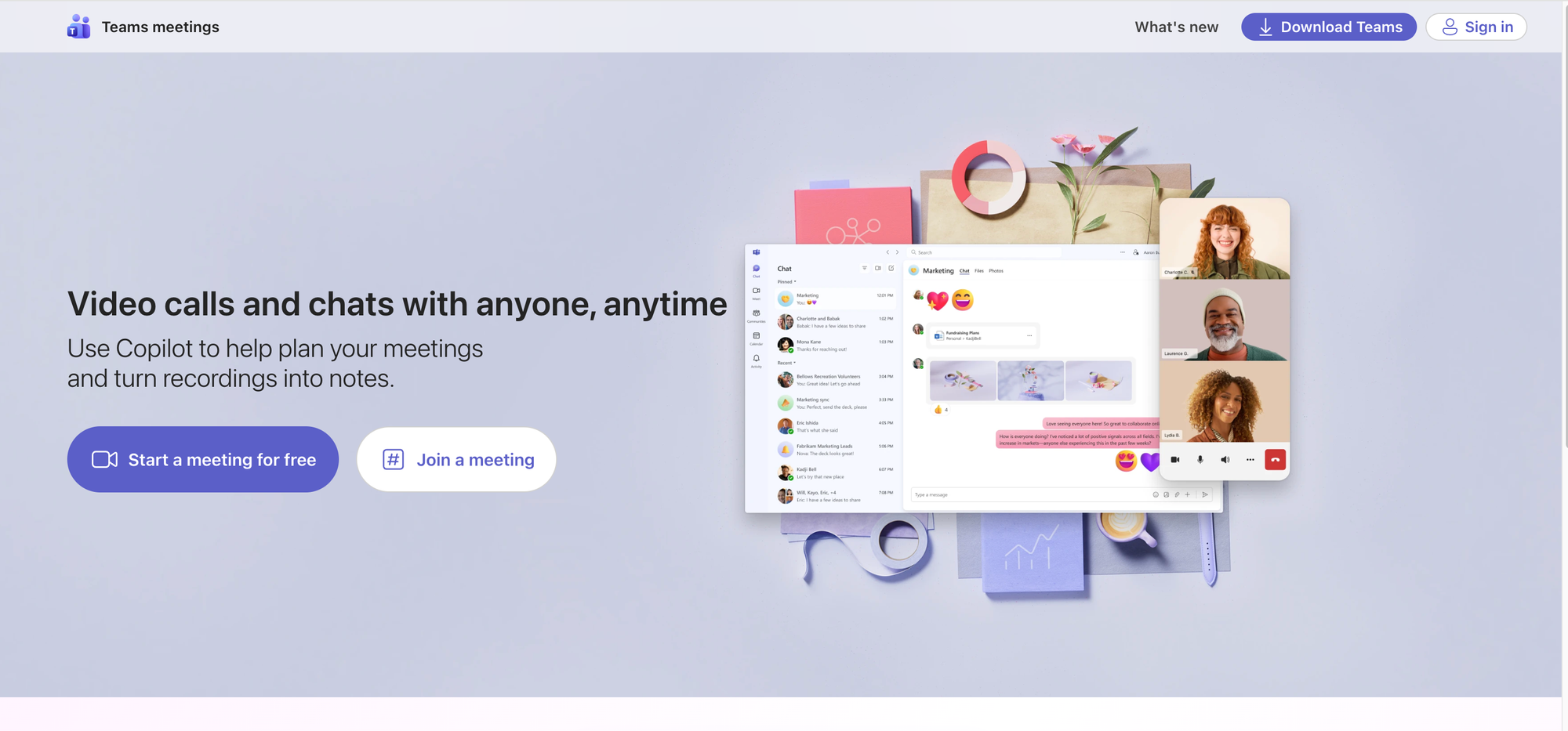
Microsoft teams is a collaborative platform that has chat, video calling and other features
It is used primarly for businesses and in schools or in a professional setting
Features
- Cost: Teams chat is a paid video and char app but has free plans as well.
- Privacy: Teams video does collect user data and usage patterns but the chats itself are private and microsoft says that it does not access chats data
- Anonymity: Teams chat is not anonymous as it is designed for identifying users set in a organization like businesses and teams
- Security: Teams chat are end to end encrypted and users can believe that the video call data is secure. Microsoft also complies with various compliance certifications and is a secure choice for schools and businesses
- Ease of Use: Teams chat is a user friendly chat as it integrates with other microsoft products seamlessly especially windows and as most of world uses windows they are pretty familier with the user interface of the teams chat
- Compatibility: Microsoft Teams chat is compatible with Windows, Mac and iOS and Android and also has a web application
🔒 Security status (2026): Encrypted in transit by default, but end-to-end encryption is OPTIONAL and OFF by default — available only for 1:1 calls, and an admin (and both users) must enable it; it is not offered for regular meetings and disables recording/transcription when on. Owned by Microsoft, with broad enterprise-compliance certifications. This is now also Skype's successor.
Skype
⚠️ Discontinued — Skype was retired by Microsoft on May 5, 2025. It is no longer a video-calling option in 2026; Microsoft moved consumers to Microsoft Teams (Free), where Skype contacts and chats migrate automatically. Skype chat history can be exported until June 15, 2026. The details below are kept for historical reference only.
Skype is telecommunications app by Microsoft. It is one of the oldest apps out there for video conferencing and instant messaging
- Cost: Skype offers both free and paid plans. Free plans include video calling and messaging, while paid plans include ability to call landline phones etc
- Privacy: Skype has encryption but it is not end-to-end encrypted like some other applications. Skype has privacy features built in but it may not be as effective as business apps like Microsoft Teams
- Anonymity: Skype requires an account to be able to use and this account is linked to Microsoft along with your phone number and email address so the Skype is not an anonymous video calling application
- Security: Skype offers a reasonable level of security for general users. Communication between users is encrypted which might prevent people from hearing your conversation
- Ease of Use: Skype has a user friendly interface. It is easy to setup and use and you can invite anyone to use the platform
- Compatibility: Skype has apps for mobile and as computers like windows and Mac. Skype also has a web application for linux and chromebook users
Google Meet
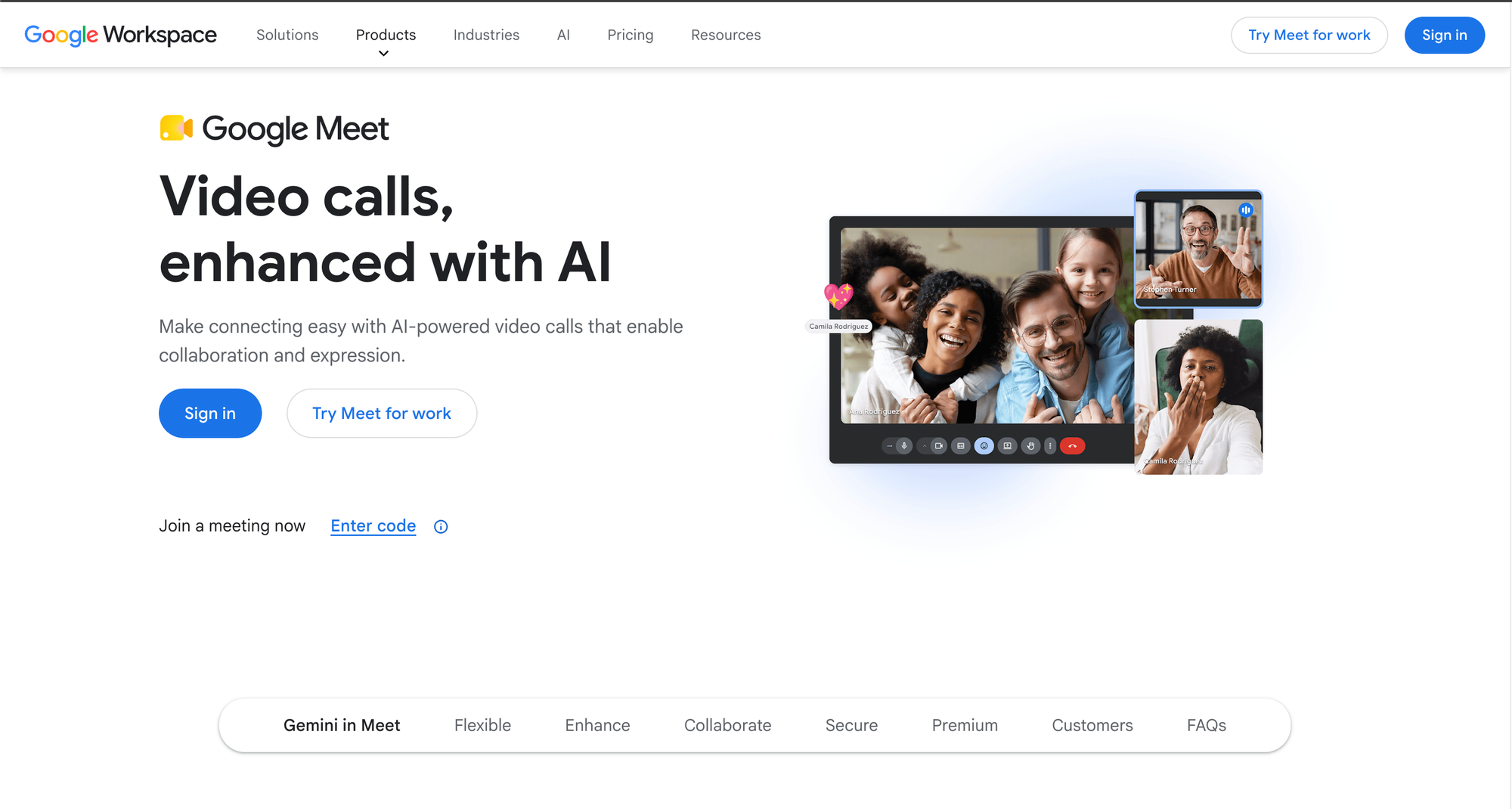
Google meet is a video calling app developed by google, this app is free for everyone and can be used by individuals as well as businesses.
Google Meet has paid plans as well which adds additional features to the already feature rich app
- Cost: Google meet has a free version which is good for individuals and small teams and also offers a paid version for businesses and larges teams that accomodates meetings with more time limits, more participants and additional features
- Privacy: google meet has a comprehensive privacy policy. While google meet has software security built in users should be aware of how google uses their data according to its privacy policy. Google says it does not sell meeting data for advertising and it will not sell the user data to others
- Anonymity: Google Meet does not have anonynious meetings as a feature. Google Meet requires users to sign up and identify themselves using their names and email addresses and this is visible to google as well as third parties as well
- Security: Google meet has encrypted video meetings and ability to control other participants video call featues such as kick participant or deny them entry into the room
- Ease of use: Google Meet is pretty easy to use and it integrates seemlessly with other google services such as gmail and google calendar to scheduling and joining online video calls
- Compatibility: Google Meet works on web browsers and has dedicated apps for iOS and Android. Google Meet however does not have dedicated apps for computers such as Mac and Windows
🔒 Security status (2026): Encrypted in transit by default (DTLS/SRTP), but end-to-end encryption is OPTIONAL — either client-side encryption (CSE) for eligible Google Workspace tiers (requires an external identity + key service), or optional E2EE for personal 1:1/group calls that the organiser must turn on. Not E2EE by default. Owned by Google; Google states it does not sell meeting data for advertising.
Cisco WebEx
Cisco WebEx is a well established player in video conferencing and online meeting. It offers video conferencing, online meeting and webinars
- Cost: Cisco WebEx has a free version with basic features like video conferencing with a limited number of participants and there is a time limit to the meeting as well. There are several paid plans as well additional meetings, time limit up to 24 hrs and cloud recordings as well
- Privacy: Cisco WebEx has a comprehensive privacy policy which describes how it uses customer data. This is because Cisco WebEx records some customer data such as customer name, meeting participants name and email id etc
- Anonymity: Users email and name is required to sign up for cisco webex so it is not a completly anonymous video calling application. The participants email and name are also required for meeting
- Security: Cisco WebEx has a strong emphasis on security and it is a popular choice in corporate environment where there is a need for higher security. It has end to end encryption, secure meeting controls
- Ease of use: It has ease of use features like integration with email clients and calendars and it enhances usability for scheduling the meetings
- Compatibility: Cisco WebEx is compatible with Windows, MacOS, Linux, iOS and Android. This makes sure that users can joing meeting from any device
🔒 Security status (2026): Meetings are encrypted by default, and Webex additionally offers optional Zero-Trust end-to-end encryption built on the MLS and SFrame standards with formally verified cryptography — the meeting key is generated per participant and never traverses Cisco's cloud. Organisations choose whether Zero-Trust E2EE is the default, opt-in, or host's choice. Owned by Cisco; a common pick in regulated corporate environments.

DeadSimpleChat
Jitsi Meet
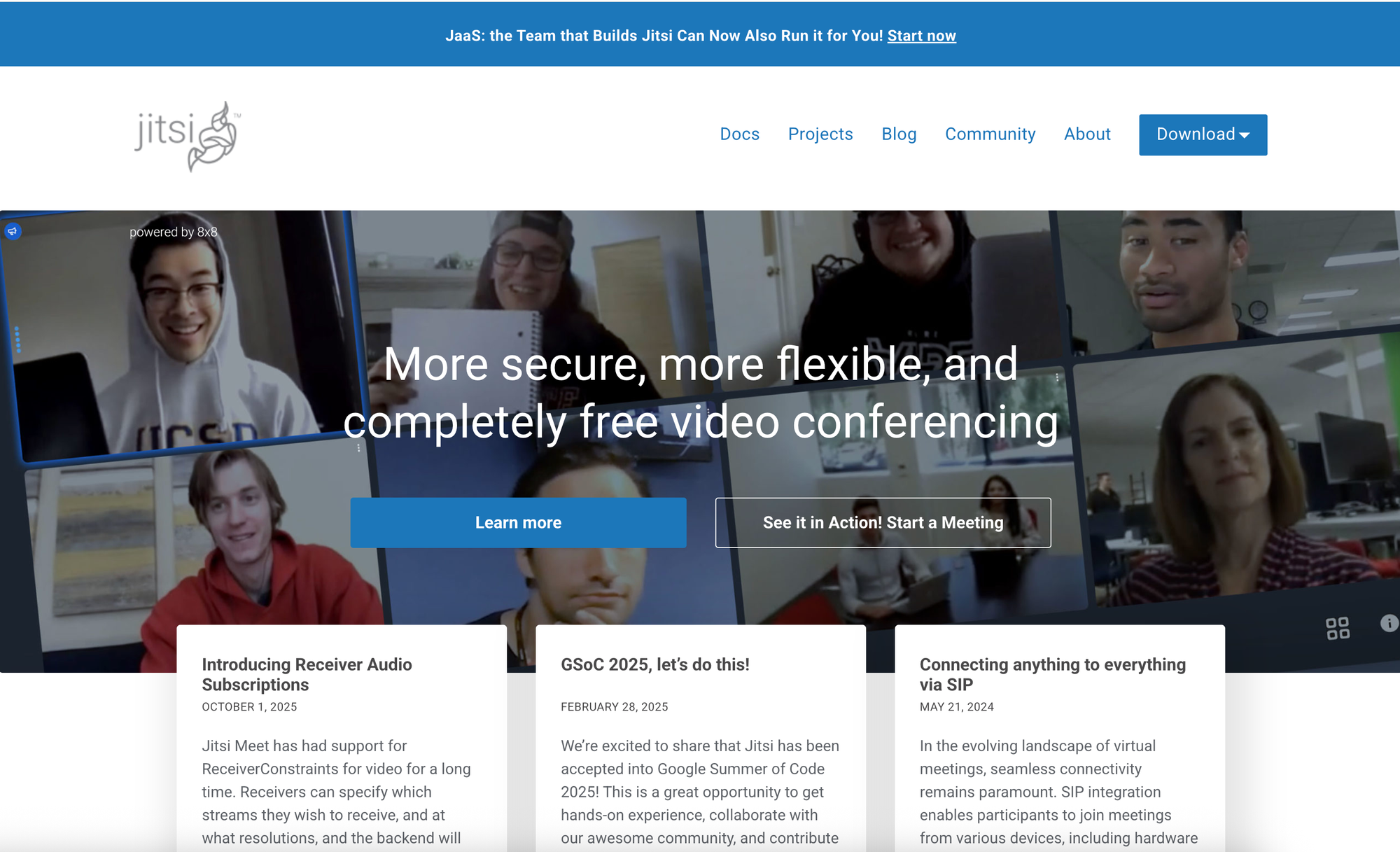
Jitsi Meet is an open source video conferencing solution that be used for both individual as well as professional use. Here are some of the featuers of Jitsi Meet
- Cost: Jitsi Meet is a free and open source product with a full suite of features. There is no limit if you host the services yourself
- Privacy: As an open source platform, Jitsi code is available and has an transperancy and security features. Jitsi meet does not require users to create an account which means privacy information is collected and stored
- Anonymity: Jitsi Meet has high degree of anonymity as compared to other video conferencing tools. Users can join meeting without having to give email address
- Security: Jitsi Meet security depends on how it has been deployed. Organizations can deploy Jitsi Meet on their own servers and can implement security measures as they need to implement including security measures
- Ease of use: Jitsi meet is easy to use software. Starting or joining a meeting is straightforward
- Compatibility: Jitsi Meet works directly in web browsers without the need to install software. Jitsi meet works with mobile as well desktop browsers
🔒 Security status (2026): Open source and owned by 8x8. 1:1 peer-to-peer calls are encrypted, but for group calls end-to-end encryption is OPTIONAL — it requires a Chromium-83+ browser with insertable streams and participants entering a shared key, and is not on by default. Because it is open source you can self-host for full control, which also means your security depends on your deployment. Recent fixes: a meeting-password disclosure bug (CVE-2024-33530, patched Apr 23, 2024) and an OAuth DOM-redirect advisory (GHSA-5fx7-wgcr-fj78, Nov 2025).
DeadSimpleChat
Viber
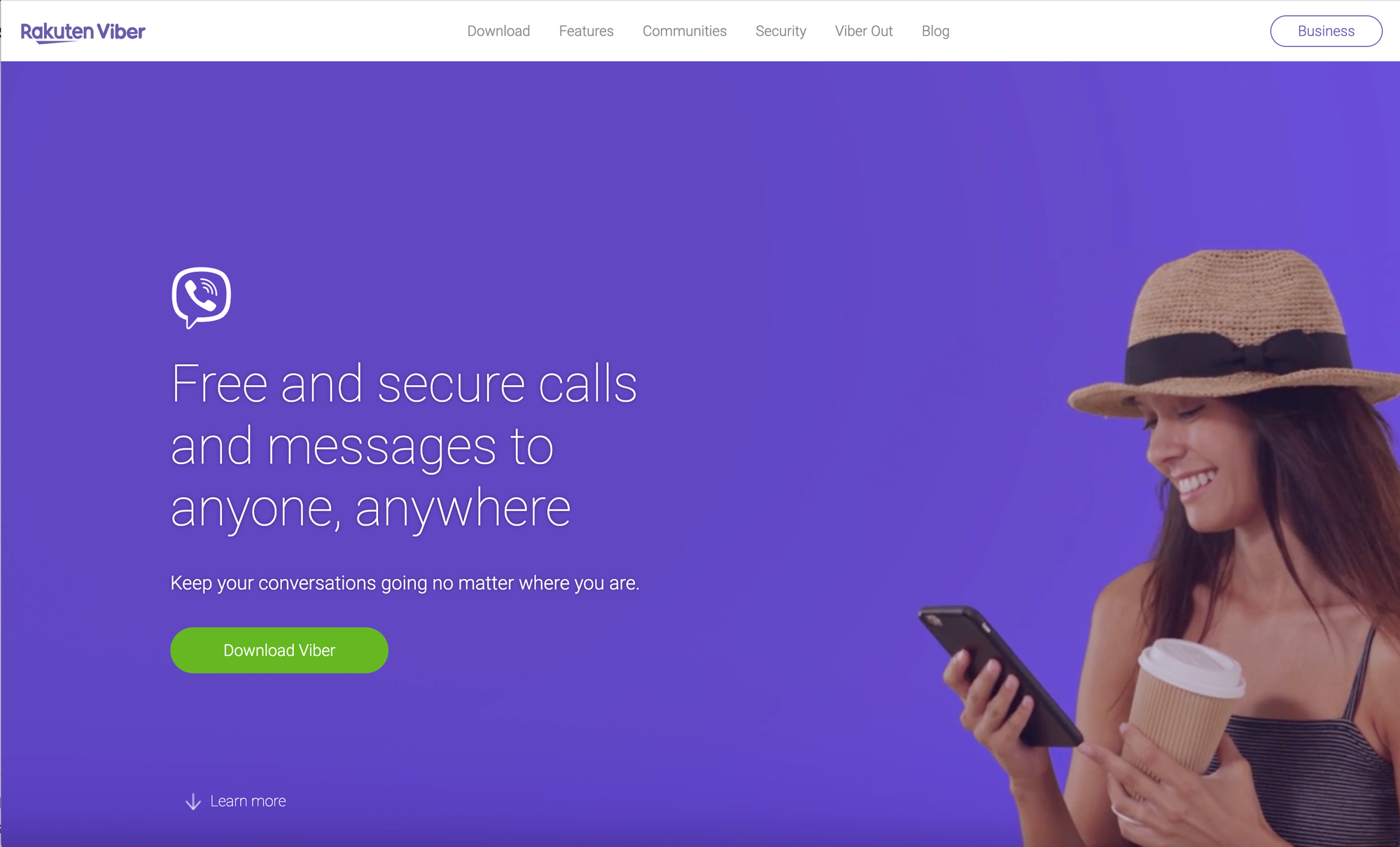
Viber is a cross platform Video calling app that is owned by the japnese corporation Rakuten. It is known for video and voice calling features
- Cost: Viber is a free video calling application. Similar to Skype it has a Viber out paid feature that enables users to call mobile phone numbers internationally for a price
- Privacy: Viber uses end to end encryption for all video and voice calling between Viber users. Thus Viber says no one not even Viber can interpret the video calls
- Anonimity: Viber requires phone numbers for verification and hence has a strong security feature but also provides less anonymity. Users can communicate without revealing their email addresses and their true identity and personal information if they do not want to do that
- Security: Viber has end to end encryption capability which is a strong security feature. Viber does not store video and voice calls on its servers
- Ease of use: Viber has a user friendly user interface. Viber is easy to setup with a phone number similar to WhatsApp and Signal
- Compatibility: Viber is compatible with iOS, Android and also has desktop apps for Windows and Mac and Linux. But it does require a mobile phone number to be activated. Like other apps it also sync between devices
🔒 Security status (2026): End-to-end encrypted by default for 1:1 and group chats and calls (Double Ratchet + AES-256), and Viber says delivered content is not stored on its servers. Owned by the Japanese company Rakuten. It requires a phone number, and note that cloud backups on iCloud/Google Drive are not covered by Viber's E2EE unless separately secured.
Conclusion
In this article we learned about the most secure video calling applications, these included DeadSimpleScreenSharing, Signal, WhatsApp, Microsoft Teams, Skype, Google Meet, Cisco WebEx, Jitsi Meet and Viber
Metered TURN servers
- Global Geo-Location targeting: Automatically directs traffic to the nearest servers, for lowest possible latency and highest quality performance. less than 50 ms latency anywhere around the world
- Servers in 12 Regions of the world: Toronto, Miami, San Francisco, Amsterdam, London, Frankfurt, Bangalore, Singapore,Sydney (Coming Soon: South Korea, Japan and Oman)
- Low Latency: less than 50 ms latency, anywhere across the world.
- Cost-Effective: pay-as-you-go pricing with bandwidth and volume discounts available.
- Easy Administration: Get usage logs, emails when accounts reach threshold limits, billing records and email and phone support.
- Standards Compliant: Conforms to RFCs 5389, 5769, 5780, 5766, 6062, 6156, 5245, 5768, 6336, 6544, 5928 over UDP, TCP, TLS, and DTLS.
- Multi‑Tenancy: Create multiple credentials and separate the usage by customer, or different apps. Get Usage logs, billing records and threshold alerts.
- Enterprise Reliability: 99.999% Uptime with SLA.
- Enterprise Scale: With no limit on concurrent traffic or total traffic. Metered TURN Servers provide Enterprise Scalability
- 20 GB/mo Free: Plus free plan with Openrelayproject.org 20 GB/mo
- Runs on port 80 and 443
- Support TURNS + SSL to allow connections through deep packet inspection firewalls.
- Support STUN
- Supports both TCP and UDP